Adult Developmental Coordination Disorder Checklist (ADC)
Posted on: September 2, 2025
Share this post:


Adult Developmental Coordination Disorder Checklist (ADC)
(Kirby, Edwards, Sugden & Rosenblum, 2010)
The Adult Developmental Coordination Disorder Checklist (ADC) is a self-report questionnaire designed to identify signs of developmental coordination disorder (DCD) in adolescents and adults. Developed by Kirby, Edwards, Sugden, and Rosenblum (2010), the tool assesses performance across a range of motor skill–related activities and daily occupations, helping clinicians establish functional treatment goals. It is suitable for individuals aged 12 and above and is typically administered by licensed occupational therapists.
The checklist, is structured into three sections that evaluate childhood functioning, current functioning, and practical adult activities. Responses are scored on a scale reflecting the frequency of difficulties, with higher scores indicating a greater likelihood of DCD. The ADC demonstrates strong psychometric reliability and validity, making it a widely recognized instrument for both clinical practice and research.
Below you can find a link to download the checklist, as well as the ID card for the checklist and the original research paper:
✅Adult Developmental Coordination Disorder Checklist (ADC): Download Checklist
✅ID Card: Download ID Card
✅Research paper: Download Research Paper
Posted on: September 2, 2025
Share this post:
Our latest insights
Professor Amanda Kirby
•
October 26, 2026
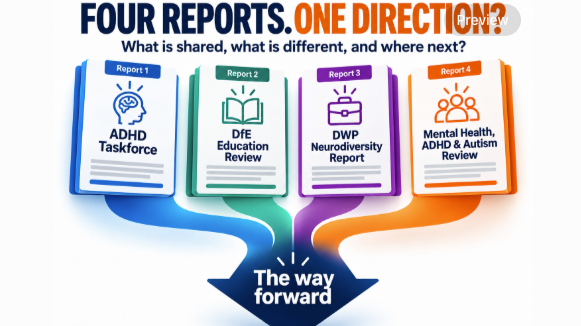
Four reports. Four perspectives. One direction of travel?
Are we finally moving from talking about neurodiversity to changing the systems that shape people's lives? Over the past 16 months I have been living...

Professor Amanda Kirby
•
September 30, 2026
The Ideal Office – Does that Exist? 5th City & Guilds ND Index: Progress not Perfection
In this week in which we are launching the 5th ( great news) City and Guilds Neurodiversity Index in partnership with the City and Guilds Foundation a...

Professor Amanda Kirby
•
July 1, 2026
From diagnosis to dynamic profiling – how digital tools can drive equity
For decades, we’ve organised neurodevelopmental differences into categories — autism, ADHD, dyslexia, developmental coordination disorder, and others ...