Neurodiversity Index Report 2025 – Get Involved
Posted on: October 4, 2024
Share this post:


🌟WE need YOUR help!🌟
We published the first Neurodiversity Index Report with City and Guilds Foundation in 2023 and then again in 2024. After the success of the previous years we are back for the 2025 Neurodiversity index. The 2025 survey is now live and ready to collect some really important benchmark data.
Please, please, please partake. We would love to see if the experience of neurodivergent employees in the workplace has changed or has training improved. What have you been doing well as an employer?
Your valuable insights and experiences will help shape actionable strategies to enhance neurodiversity in the workplace.

Let's work together to create more inclusive and diverse environments where every individual can shine. ?
Our survey is now live – and every opinion and experience counts to give us a better picture on how employers can support and retain neurodiverse talent.
👉This survey is for everyone – employers AND individuals.
Please take part today. You can also claim a City and Guilds digital credential to share with your networks to help us strive for more inclusive and equitable workplaces.
 Click here to take the Survey
💡 To find out more about our report and campaign, head to:
https://cityandguildsfoundation.org/what-we-offer/campaigning/neurodiversity-index/
#equalopportunitiesmatter #neurodiversity #excited #employment #inclusion #cityandguilds
Posted on: October 4, 2024
Share this post:
Our latest insights
Professor Amanda Kirby
•
October 26, 2026
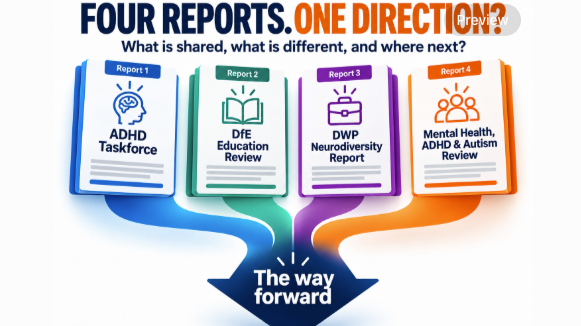
Four reports. Four perspectives. One direction of travel?
Are we finally moving from talking about neurodiversity to changing the systems that shape people's lives? Over the past 16 months I have been living...

Professor Amanda Kirby
•
September 30, 2026
The Ideal Office – Does that Exist? 5th City & Guilds ND Index: Progress not Perfection
In this week in which we are launching the 5th ( great news) City and Guilds Neurodiversity Index in partnership with the City and Guilds Foundation a...

Professor Amanda Kirby
•
July 1, 2026
From diagnosis to dynamic profiling – how digital tools can drive equity
For decades, we’ve organised neurodevelopmental differences into categories — autism, ADHD, dyslexia, developmental coordination disorder, and others ...